


Mr. Oeun Sarun is a 71-year-old CBO leader in Thmey village, Bansay Treng commune, Thmor Kol district, Battambang province. He leads a CBO called “Sahakum Morodak Phum Thmey,” which was selected as one of the cluster members in the Together for Gender Justice (T4GJ) project in October 2022.
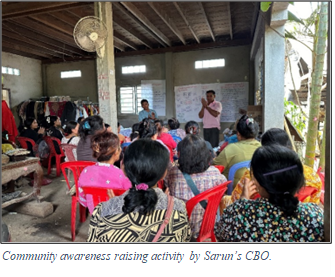
Mr. Oeun Sarun is a 71-year-old CBO leader in Thmey village, Bansay Treng commune, Thmor Kol district, Battambang province. He leads a CBO called “Sahakum Morodak Phum Thmey,” which was selected as one of the cluster members in the Together for Gender Justice (T4GJ) project in October 2022.
Similar to other CBO leaders participating in the T4GJ project, Mr. Sarun facilitated community meetings to share knowledge and understanding of sexual harassment so that participants can further spread the knowledge to the family and neighbors. In his own time, he also continuously disseminated his knowledge to his neighbors and friends as well. He observed that his family and community gradually changed their thinking on sexual harassment, by reflecting on what they did in the past and how they can prevent it now and in the future.
Similar Stories
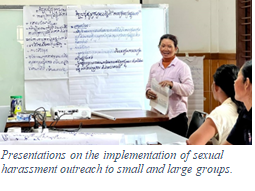
Renewed purpose: Raising awareness on sexual Harassment one community at a time
Sinath is a leader of a commune-based organization (CBO) in her community. She started volunteering with Banteay Srei in 2008. Sinath wasn’t always very confident and active in her community. Living in a small community, Sinath faced pressures related to societal and family norms, stereotypes, and judgements. She took on traditional roles of taking care of her children, husband, and in-laws and didn’t feel brave enough to socialize outside the house and attend village activities or meetings. After becoming a volunteer with BS, Sinath had more opportunities to attend different events with BS. Those events – meetings, trainings, public forums, study tours – in her province and beyond have helped her to build knowledge and experience. Now, Sinath has a better understanding of leadership and her self-worth. She has also gained new skills such as public speaking, communications, planning, business, community mobilization, and facilitation. Sinath continues to equip herself with new knowledge and skills. In 2023, she learned and gained new knowledge from BS on sexual harassment. Sinath is a member of one of the five CBOs selected by BS to receive sexual harassment training. Sinath finds this new knowledge very important for her and other women in her community. After the training, she is able to recognize different types of harassment as well as harmful and discriminatory jokes often made by people around her. Sinath believes that lessons on sexual harassment can help men to understand and cease their discriminatory behavior that leads to sexual harassment. After the training, she has applied what she learned in her daily life and among her monthly saving group that she belongs to. Her peers showed a lot of interest in the subject and expressed that this would help them shift their perception and inspire some positive changes in their daily lives. For the future, Sinath plans to advocate on the issue of sexual harassment in her village by using operational funds received from Village Savings/Credit Group program. Along with the advocacy effort, she also plans to raise awareness on other topics such as importance of educating children, the impact of young marriage, gender-based violence, leadership, and positive thinking.
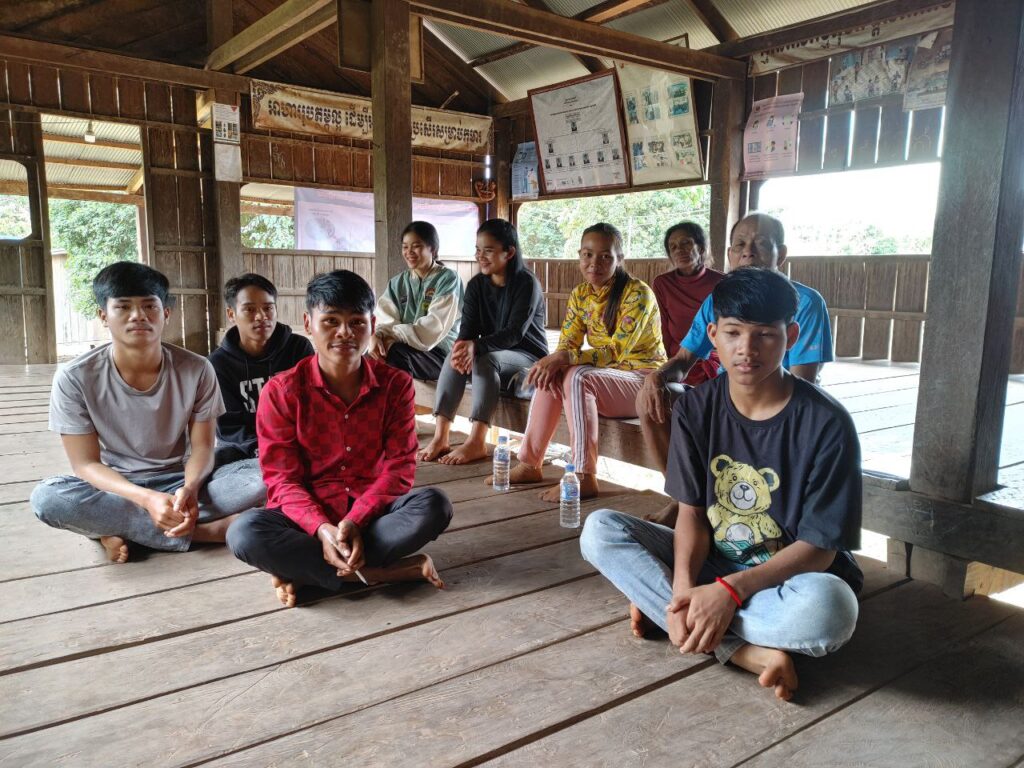
Indigenous youth become confident in expressing himself
Participating in discussions and learning about current issues boosts indigenous youth’s confidence. “Because I participated in various activities and training, I now feel more confident in expressing myself and my community.” Mr. Mong Samut is a 22-year-old Brao indigenous youth. He was born in a remote area located in Sieng Say village, Ta Veaeng Kraom commune, Ta Veaeng district, Ratanakiri province. This is where he is living with his family. As an indigenous youth, he had few opportunities for further education. He was a young farmer without a confident expression and so preoccupied with his job that he was unaware of the situation outside of the community. However, land and forestry issues have arisen in his community. He wishes to seek assistance and share these conflicts and challenges with others to obtain protective intervention. Mr. Mong Samut (Red shirt) participated in the meeting on identifying topics on NRM and land conducted by CIPL in his village center located in Seang Say village, Taveng Kroam commune, Taveng district, Ratanakiri province. Until he gets to know Open Development Cambodia (ODC) and Conserve Indigenous Peoples Languages (CIPL) organizations, he has a chance to learn and participate in various activities and training such as mobile report training, data visualization and storytelling, and identifying topics on natural resource, land, and environment. He has learned how to identify problems, edit videos, and gain basic knowledge of natural resources, land, and forestry. Even though his knowledge cannot be compared to that of people living in cities, he is dedicated and always pays more attention to the lesson and discussions. The desire to express the community's issues and challenges keeps him go on. He is ready to share what is going on in his community while gathering information from others to share with his own. He pledges to open his community's culture, livelihood, and issues through what he learned if given the opportunity.
Fostering legislative review: Empowering the implementation of Strategic Environmental Assessment (SEA)
In 2023, the Royal Government of Cambodia (RGC) took a significant step towards environmental stewardship by officially endorsing the Environment and Natural Resources Code (ENR Code). This landmark decision incorporated the implementation of the Strategic Environmental Assessment (SEA) as a pivotal element in driving development. Recognizing the significance of this initiative, ODC committed itself to actively supporting the enforcement, dissemination, and monitoring of SEA progress. As part of this commitment, on November 22, ODC, with support from USAID through FHI 360, organized a highly impactful workshop/dialogue to discuss the implementation of SEA. This event brought together key stakeholders, including the Ministry of Environment's Department of EIA and the National Council for Sustainable Development (NCSD), as well as representatives from the Ministry of Planning, the Ministry of Tourism, an EIA consultancy firm, and ClientEarth. The participation extended to over 50 Civil Society Organizations (CSOs), Community-Based Organizations (CBOs), journalists, and indigenous representatives from various provinces, all working collaboratively towards sustainable development and inclusivity. The success of the project implementation is evident in the positive shift observed in the behavior of relevant ministries. The increased responsiveness and active participation of these ministries showcase the tangible impact of the project. This success not only marks a significant milestone in advancing SEA implementation but also underscores the project's contribution to fostering positive changes within governmental entities, fostering a more collaborative and participatory approach to sustainable national development.